
Essential thrombocythaemia
Over-production of platelets can lead to abnormal clots, stroke or heart attack. Dencatistat is studied for people who did not respond to, or could not tolerate, current treatment.
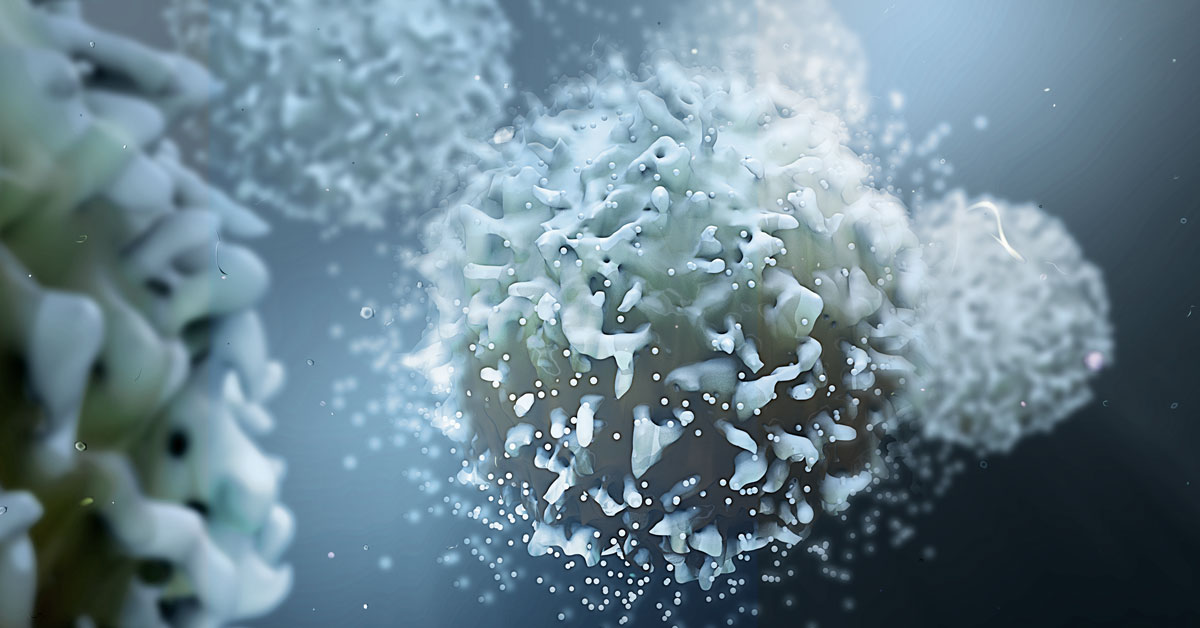
CTPS1 sits at the rate limiting step of the pathway cells use to make CTP for new DNA. Blocking it selectively is what dencatistat was built for.
CTP is a precursor of DNA, RNA and phospholipids. De novo synthesis of CTP is required for DNA replication.
CTP comes from two sources, the nucleotide salvage pathway and de novo synthesis. The rate limiting step of de novo synthesis is the conversion of UTP to CTP, catalysed by CTP synthase 1 (CTPS1) or CTPS2.
In 2014 Prof. Alain Fischer and colleagues at the Imagine Institute described children with loss-of-function CTPS1 mutations. Their activated lymphocytes could not proliferate, while cells outside the blood system were unaffected (Martin et al., Nature 2014).
A potent, orally bioavailable CTPS1 inhibitor with greater than 1,000-fold selectivity for human CTPS1 over CTPS2.
Dencatistat binds to each monomer of CTPS1, mimicking CTP, and so inhibits the enzyme’s activity. It is a targeted therapy that kills cancer cells while sparing healthy cells.
It has shown anti-proliferative and pro-apoptotic effects against a range of T cell cancer cell lines, and is now in clinical development in blood cancers, essential thrombocythaemia and solid tumours.
See the pipeline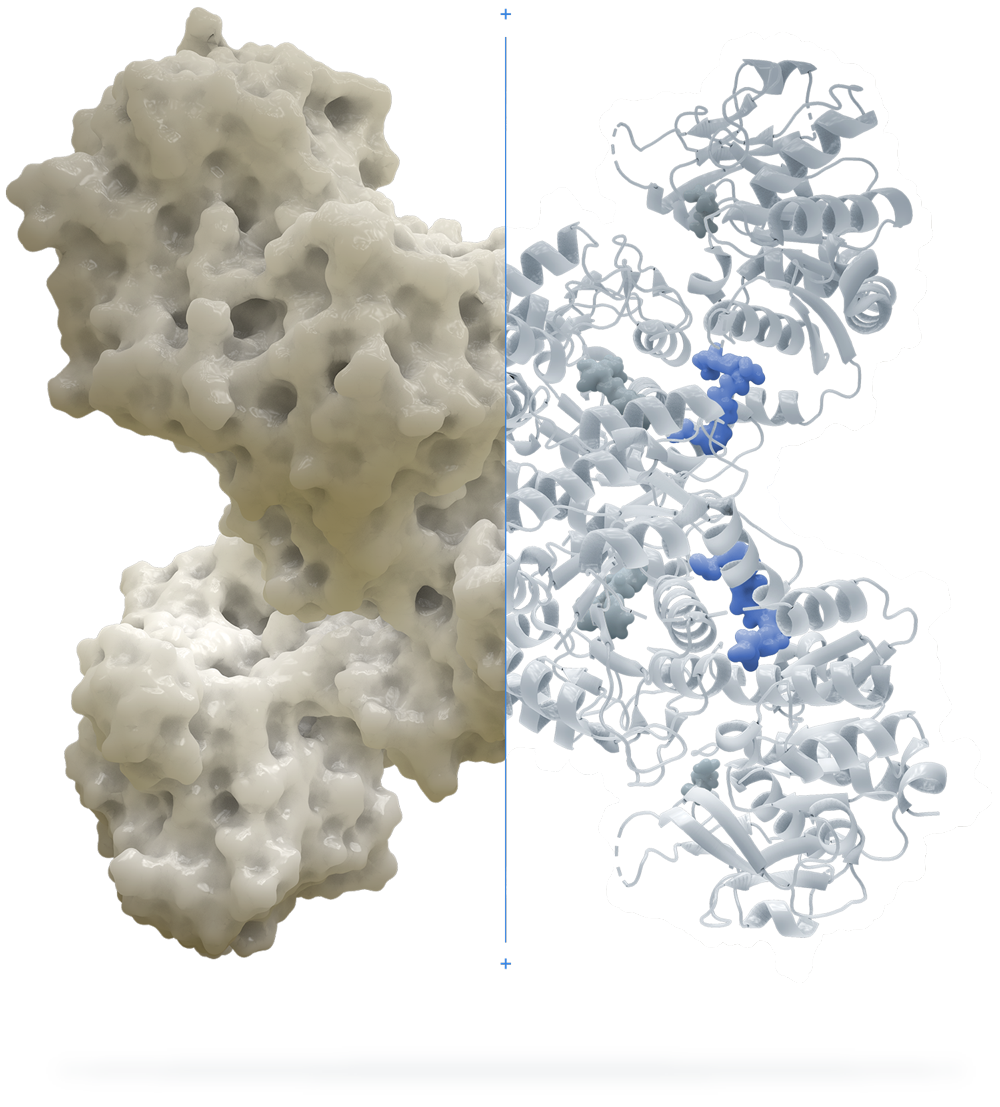
Over-production of platelets can lead to abnormal clots, stroke or heart attack. Dencatistat is studied for people who did not respond to, or could not tolerate, current treatment.
An innovation desert. Five-year survival remains below 30%, and approved second line agents show limited efficacy.
Despite CAR-T and bispecific antibodies, a significant share of patients relapse. Dencatistat may work alone or in combination.
Tumours that deleted CTPS2 depend absolutely on CTPS1. Focus on lung, ovarian and endometrial cancers, with biomarker selection.
Researchers and clinicians interested in CTPS1 biology or our trials can reach the team directly.
Contact the team